
PA Gun Ban Bill Update- IMPORTANT

hand gunNothing is grandfathered, its very broadly worded, it builds and expands on Feinstein’s ban. This could spell the end of most semi automatic rifles in PA except rimfire .22 rifles, as well as quite a few semi auto shotguns and handguns. Call and email your PA state senators now to stop this:

SENATE BILL No. 435 INTRODUCED BY FARNESE, WASHINGTON, STACK, WILLIAMS, COSTA, FONTANA, ERICKSON AND HUGHES, FEBRUARY 5, 2013 REFERRED TO JUDICIARY, FEBRUARY 5, 2013 AN ACT Amending Title 18 (Crimes and Offenses) of the Pennsylvania Consolidated Statutes, in firearms and other dangerous articles, providing for an offense relating to assault weapons and large capacity magazines. The General Assembly of the Commonwealth of Pennsylvania hereby enacts as follows: Section 1. Title 18 of the Pennsylvania Consolidated Statutes is amended by adding a section to read: § 6105.2. Assault weapons and large capacity magazines. (a) Offense defined.–Except as otherwise provided in subsection (b), no person shall possess, manufacture, import, sell or transfer any class 1 assault weapon or large capacity magazine. (b) Exceptions.–The provisions of subsection (a) shall not apply to: (1) Constables, sheriffs, prison or jail wardens, or their deputies, policemen of this Commonwealth or its political subdivisions or other law enforcement officers. (2) Members of the Army, Navy, Marine Corps, Air Force or Coast Guard of the United States or of the National Guard or organized reserves when they are on duty. (3) Officers or employees of the United States duly authorized to carry a concealed firearm. (c) Grading.– (1) Except as otherwise provided in paragraph (2), a person who violates this section commits a misdemeanor of the first degree. (2) A second or subsequent offense under this section shall be graded as a felony of the third degree. (d) Definitions.–As used in this section, the following words and phrases shall have the meanings given to them in this subsection unless the context clearly indicates otherwise: “Class 1 assault weapon.” Any of the following: (1) A semiautomatic center fire rifle capable of accepting detachable magazines and a pistol grip protruding conspicuously below the weapon’s action, a thumbhole stock or folding or telescopic stock; a flash suppressor, grenade launcher or flare launcher; or a forward pistol grip. (2) A semiautomatic center fire rifle with overall length of less than 30 inches. (3) A semiautomatic center fire rifle with a fixed magazine capable of holding over ten rounds of ammunition. (4) A semiautomatic pistol capable of accepting detachable magazines and a threaded barrel; a second handgrip; a capacity to accept a detachable magazine at some location outside the pistol grip; or a shroud attached to, or partially or completely encircling, the barrel allowing the bearer to fire the weapon without burning the bearer’s hand, except for a slide enclosing the barrel. (5) A semiautomatic pistol with a fixed magazine having the capacity to accept over ten rounds. (6) A semiautomatic shotgun having a folding or telescoping stock; a pistol grip protruding conspicuously beneath the action of the weapon, a thumbhole stock or a vertical handgrip. (7) A semiautomatic shotgun with the ability to accept detachable magazines. ( 8 ) A shotgun with a revolving cylinder. “Large capacity magazine.” Any detachable ammunition feeding device with the capacity to accept more than ten rounds of ammunition. The term does not include any of the following: (1) a feeding device that has been permanently altered so that it cannot accommodate more than ten rounds; (2) a .22 caliber tube ammunition feeding device; or (3) a tubular magazine that is contained in a lever action firearm. Section 2. This act shall take effect in 60 days.

UPDATE:Lots more gun control legislation is entering PA.

Mandatory liability insurance for LTCF (CCW) being introduced as HB 521: HB 521 Rep Waters – Mandatory 1 million LTCF liability insurance – 2013-2014

Effectively a reversal of PA castle doctrine is being introduced as HB 518: HB 518 Rep Waters efforts to GUT & WEAKEN PA Castle Doctrine – 2013-2014

Then there is HB 335, which will make almost anyone who has received any kind of mental health care (anxiety/depression medicine, talked to a therapist, etc.) ineligible to own a gun: We need to stop HB 335. Call reps.

Lisa Nancollas, lnancollas@aol.com
Mifflin County Tea Party Patriots, Coordinator

Tea Party Patriots PA State Coordinator

717-437-1327
www.teapartypatriots.org

Sen. Toomey to Hold Casework Day at Keller’s Mifflinburg Office

Sen. Toomey to Hold Casework Day at Keller’s Mifflinburg Office

MIFFLINBURG – Rep. Fred Keller (R-85) announced today that the staff of U.S. Sen. Pat Toomey (R-Pa.) will hold a casework day at his Mifflinburg district office from 9 a.m. to 1 p.m. on Friday, Feb. 22.

During the casework day, Toomey’s staff will be available to help constituents who need assistance with federal-related issues, including problems with federal agencies and programs. Residents are encouraged to bring any relevant documents they may have.

Steve Kelly, Toomey’s central Pennsylvania regional manager, will be on hand to help area residents throughout the casework day.

Keller’s district office is located at the Mifflinburg Government Center, 343 Chestnut Street, Suite 1, Mifflinburg.   The phone number for more information is (570)-966-0052.

For the latest legislative updates, visit www.RepFredKeller.com.

Representative Fred Keller
85th District
Pennsylvania House of Representatives

Contact:    570.966.0052

NFRW explains What You Need to Know About the Sequester

What You Need to Know About the Sequester: 

  • What is the sequester? The sequester was an idea brought forth by the Obama administration during debt ceiling talks involving the “super committee” of 2011. The sequester was the administration’s threat over the super committee to bring about budget cuts of 1.2 trillion dollars over 10 years. The sequester was supposed to be so distasteful to both Democrats and Republicans that it would serve as an impetus to achieve the administration’s desire for specific budget cuts. The super committee failed, and the sequester stayed.
  • When will it go into effect? It was originally supposed to take effect in January of 2013, but the fiscal cliff deal postponed the date until March 1, 2013.
  • What happens if it takes effect? If the sequester goes into effect on March 1, it will set off a series of automatic cuts to defense and entitlement programs that equal $965 billion over the next ten years. But what do “cuts” mean in this case? As Michael Tanner observes in National Review Online, “the sequester is a ‘cut’ to federal spending only in the Washington sense of ‘any reduction from baseline increases is a cut.’ In reality, even if the sequester goes through, the federal government will spend $2.14 trillion more in 2022 than it does today.” Further, “the sequester would reduce the growth in domestic discretionary spending by $309 billion over ten years. But annual spending on these programs will increase by $90 billion over that period.” In other words, even with the sequester “cuts,” we are going to spend more money on domestic programs in 2022 than we do today.
  • What is the budget baseline and how does it relate to the sequester?  The budget baseline is what the Congressional Budget Office determines federal revenues, outlays, surpluses, and deficits will be assuming future budgets will equal the current budget times the inflation rate times the population growth rate. The current budget baseline says that the government will spend $44.8 trillion between 2013 and 2022. The sequester will cut this number by $1.16 trillion, barely 2.6 percent of the what the government plans to spend until 2022.  
  • How much would it cut government spending this year? While the sequester cuts $965 billion over the next ten years, it would cut spending by $44 billion in 2013. The expected budget for 2013 is $3.97 trillion, so an $44 billion cut amounts to 1.2% of the budget. The federal government spends $44 billion in approximately 4.5 days.
  • Some Republicans are worried about the cuts to defense, what about those? Yes, the sequester will cut the budget for the Department of Defense, but in inflation-adjusted terms, the rate of spending will never go below 2007 levels. As Tanner points out, “By 2015 [defense spending] will rise again, surpassing 2012 levels, ($554 billion) by 2019 and reaching $589 billion by 2021….By comparison, the United States spent, in 2013 dollars, an average of just $435 billion per year on defense during the Cold War (1948-1990), when we faced a much greater conventional threat.” Further, the cuts to defense do not effect war spending, only base defense spending. Next year’s budget for the Defense Department is $552 billion, and the sequester will require a $55 billion cut from that budget, amounting to 10%. These cuts do not effect war spending. Defense Secretary Panetta has already ordered the first steps towards readying the Defense Department to deal with the cuts, by “freezing civilian hiring, delaying certain contract awards and curtailing nonessential facility maintenance.” Again, the sequester has not and will not impose drastic cuts to necessary defense spending.
  •  How will the cuts affect GDP? The Wall Street Journal estimates the cuts amount to 0.5% of GDP.
  • Besides some defense spending, what other programs are exempted from the sequester? Apart from war spending at the Department of Defense, other programs exempted from the sequester include Social Security, Medicaid, the children’s health insurance program, refundable tax credits, supplemental security income, the food stamp program, and veteran’s health benefits. Medicare, however, is not exempted, and will see a 2% cut in Medicare payments to insurance plans and doctors who accept Medicare.
  • Deeming the sequester “a pittance,” Senator Rand Paul (R-KY) pointed out that “even with the sequester, spending goes up $7 trillion or $8 trillion over the next ten years.” The sequester cuts are standing law, and the only cuts to spending that have been agreed to in this administration.

This analysis was compiled from the work of Michael Tanner for National Review Online (Don’t Fear the Sequester), Donna Cassata from the Associated Press (The nuts and bolts of the sequester), The Wall Street Journal (The Unscary Sequester, and Panetta Orders First Concrete Sequester Steps), and Susan Jones for CNSNews.com (Sen. Rand Paul: The Sequester is a Pittance). Also, see the latest CBO report on the sequester here.

PA proposed bill would require all law abiding firearms owners to purchase firearms liability insurance

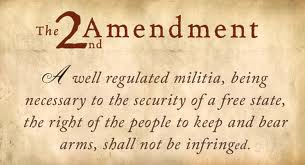
PA House Representative Daryl Metcalfe writes, “Rep. Ron Waters (D-Phila./Delaware) has proposed legislation that would require ALL law-abiding firearms owners to purchase firearms liability insurance. The bill also includes a provision that allows law enforcement officers to confiscate firearms if “proof of insurance” is not presented. This is another liberal gun-grabbing attempt and a violation of the 2nd Amendment and Article 1, Section 21 of the Pennsylvania Constitution.”

2nd Amendment Rights on a local level – is your mayor one of them?

Passion to Action

Protect Your 2nd Amendment Rights

President Obama’s 23 edicts through Executive Order regarding our 2nd Amendment “right to keep and bear arms” has the passion across our country to protect these God-given and Constitutionally protected rights running high

Preaching to the choir and posting on Face book about these attacks on the 2nd Amendment will not stop the anti-gun agenda that is being waged at all levels of government. By turning this passion into action, below you will find a brief overview of what is being done to combat this full frontal assault on our 2nd Amendment and what action you can take to help stop it.

State Level

At the State level, many states are introducing legislation that would forbid any diminishing or infringement of our 2nd Amendment rights. In Ohio, State Senator Kris Jordan has announced he will be introducing legislation in the Ohio Senate that will closely resemble a pro-2nd Amendment bill recentlyintroduced in Wyoming.

When this bill is introduced in Ohio we will forward the information and ask that you call state legislators to encourage its’ passage.

Local Level

It is at the local level where you can make an immediate impact in defending our 2nd Amendment rights as it is at this level where most anti-gun legislation can be enacted with the least amount of media coverage and fanfare. Furthermore, it is at this level where many of the anti-gun crowd is already mobilizing.

NY Mayor Michael Bloomberg’s “Mayor’s Against Illegal Guns” (MAIG) group has been discreetly working at the local level to abridge our “right to keep and bear arms.”

Prior to the Newtown School shootings, this group, MAIG, had over 800 Mayors signed on as supporters – after Vice President Joe Biden recently met with Mayors (Video) from across the country at the Conference of Mayors held in D.C. membership to this group grew by over 400,000 Mayors.

There are currently many Mayors from cities & townships across Ohio that have joined Bloomberg’s Mayors Against Illegal Guns — and this is where YOU can immediately start to defend your 2nd Amendment rights by putting your passion to action!

Passion to Action

Below you will find two paths to take to stop the Anti-Gun Agenda from being implemented at the local level.

See if your Mayor is a member of Mayor’s Against Illegal Guns by clicking here. See link above!

If your Mayor is a member, work must start immediately to stop any further implementation of MAIG’s Anti-Gun Agenda.

1.) Contact your council members or township trustees to see if they are aware your Mayor is a

member of MAIG. If so, ask if they supported his signing on and ask they assist you in having

the Mayor rescind his membership immediately.

2.) If you Mayor and Council members/Township Trustees refuse to do so, contact your friends and

neighbors and begin a campaign of phone calls, emails, letter writing. Circulate a petition asking

your Mayor to immediately remove your City as a member of this group and present the petition at

your next Council / Township meeting.

If your Mayor is not already a member of MAIG, be proactive and ask that your council members or township trustees immediately pass a Resolution in support of our 2nd Amendment rights.

We have a template resolution supporting the 2nd Amendment that is suitable for passage at the local level. If you are willing to ask your Council or Township Trustees to pass a resolution supportive of the 2nd Amendment, please contact us immediately at