SUN Area Council of Republican Women Formally Opposes Common Core Standards

Resolution on Common Core State Standards and Assessments

WHEREAS, The Common Core State Standards Initiative (“Common Core”), and its Pennsylvania implementation now known as Pennsylvania Academic Standards, are a set of academic standards, promoted and supported by two private organizations, the National Governor’s Association (NGA) and the Council of Chief State School Officers (CCSSO) as a method for conforming American students to uniform (“one size fits all”) achievement goals to make them more competitive in a global marketplace; and,

read the entire resolution

Sufferage – Women and the GOP

Women and the GOP
Suffrage

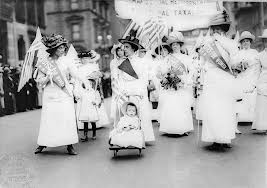
The Republican Party pioneered the right of women to vote and was consistent in its support throughout the long campaign for acceptance. It was the first major party to advocate equal rights for women and the principle of equal pay for equal work.  The Women’s Rights Convention held in Seneca Falls, N.Y., in 1848 marked the beginning of the women’s suffrage movement in the United States. Two years later there was a nationwide meeting in Worcester, Mass.  By 1870, the Massachusetts Republican State Convention had already seated two suffragettes, Lucy Stone and Mary A. Livermore, as delegates. In addition, the National Republican Convention of 1872 approved a resolution favoring the admission of women to “wider fields of usefulness” and added that “the honest demand of this class of citizens for additional rights … should be treated with respectful consideration.” 

Wyoming, the state that pioneered women’s suffrage, sent two women, Therese A. Jenkins and Cora G. Carleton, to the 1892 Republican Convention in Minneapolis as alternate delegates. This was the first time women were seated at a Republican National Convention.

This convention was also the first to be addressed by a woman, J. Ellen Foster, chairman of the Women’s Republican Association of the United States. A strong believer in organization, Foster said her association had prepared work plans for women’s involvement in national politics. Copies were given to each delegate and alternate. “We are here to help you,” she declared, “and we are here to stay.” 

At the request of Susan B. Anthony, Sen. A.A. Sargent, a Republican from California, introduced the 19th Amendment in 1878. Sargent’s amendment (also known as the Susan B. Anthony Amendment) was defeated four times by a Democrat-controlled Senate. When the Republican Party regained control of Congress in 1919, the Equal Suffrage Amendment finally passed the House in May of that year and in the Senate in June. 

When the Amendment was submitted to the states, 26 of the 36 states that ratified it had Republican legislatures. Of the nine states that voted against ratification, eight were Democratic. Twelve states, all Republican, had given women full suffrage before the federal amendment was ratified. 

On August 18, 1920, Tennessee became the 36th and final state needed to ratify the amendment. The U.S. Secretary of State certified the amendment on Aug. 26, 1920.

Source: Office of the Co-Chairman, The Republican National Committee

sufferage

Republican Women Need YOU!

thumb_election_unclesamRepublican Women across the nation have joined forces to bring American back to the principles it was founded upon and the republican party back to the values it was founded upon.  Republican Women is organized in three tiers, national (NFRW), state (PFRW) and local councils.  If you are not part of Republican Women, why not join?  You can put as much or as little time into it as your schedule allows.  National consists of all 50 states and their website is loaded with information!  Pennsylvania’s federation is even older that national’s!  Local clubs are found throughout the state of Pennsylvania.  It take ten members to form a club. Why not join a club or start your own today?

For more information contact Irene Harris, PFRW State Director at rockstargop@verizon.net

NFRW annouces speakers at 2013 Convention

SPEAKERS

CONFIRMED
 Nancy Bocskor, trainer, consultant, professor and author of “Go Fish: How to Catch and (Keep) Contributors” [WEB SITE]
Event: NFRW Leadership School and Educational Seminar, “How to Ask for Money, Even if You Hate To”

 Elaine Chao, former Secretary, U.S. Department of Labor [WEB SITE]
Event: Saturday Luncheon, Keynote Address

 Dr. Timothy Daughtry, former clinical psychologist, Chairman and CEO of Concord Bridge Consulting, and co-author of “Waking the Sleeping Giant: How Mainstream Americans Can Beat Liberals at Their Own Game”
Event: Saturday General Session

 Sharon Day, Co-Chairman, Republican National Committee [WEB SITE]
Event: Saturday General Session, Opening Address

 Stephen Fong, National Field Director for Asian Pacific-American initiatives, Republican National Committee
Event: Educational Seminar, “Demographic Partners and Earning Support”

 Jerri Ann Henry, digital account lead, Widmeyer Communications [WEB SITE]
Event: Educational Seminar, “Using Social Media to Engage and Persuade Voters”

 Karen Johnson, former Assistant Secretary of Education for Legislation and Congressional Affairs [WEB SITE]
Event: NFRW Leadership School

 Jennifer Korn, Deputy Political Director and National Field Director for Hispanic initiatives, Republican National Committee
Event: Educational Seminar, “Demographic Partners and Earning Support”

 Annie Lewis
Event: Educational Seminar, “Using Social Media to Engage and Persuade Voters”

 Mitch McConnell, U.S. Senate Republican Leader, Kentucky [WEB SITE]
Event: Saturday General Session

 Kristal Quarker-Hartsfield, National Field Director for African-American initiatives, Republican National Committee
Event: Educational Seminar, “Demographic Partners and Earning Support”

 Deb Sofield, speaker, coach and author of “Speak Without Fear” [WEB SITE]
Event: NFRW Leadership School

 Kay VanSant, Chairman, NFRW Leadership Development Committee
Event: Educational Seminar, “Federation Leadership Challenges and How to Face Them”

 Rick Wiley, former Political Director, Republican National Committee [WEB SITE]
Event: Educational Seminar, “Devising a Winning Strategy for the 2014 Midterm Elections”


INVITED

 Ted Cruz, U.S. Senator, Texas [WEB SITE]

 Rand Paul, U.S. Senator, Kentucky [WEB SITE]

 Marco Rubio, U.S. Senator, Florida [WEB SITE]

 Nikki Haley, Governor, South Carolina [WEB SITE]

 Louie Gohmert, Congressman, Texas [WEB SITE]

101 Million Americans Received Food Aid Last Year

NFRW Political Briefing

U. S. Department of Agriculture statistics show nearly one-third of Americans received government-funded food aid in 2012. With roughly a dozen federal food assistance programs operating today, 59 percent of American households participate in one of the four largest food assistance programs – food stamps, school breakfasts, school lunches, and WIC – and end up receiving benefits from two or more programs.

In general, the federal government funds roughly 80 welfare programs including 12 educational assistance programs and 11 housing assistance programs at a cost of nearly $1 trillion a year.

For decades, the federal government has been pouring taxpayer dollars into an increasing number of welfare programs in an attempt to tackle poverty. Yet this system has proven ineffective at helping individuals and families reach self-sufficiency.

The size of today’s welfare system clearly demonstrates the need for both opportunity-based economic policies and critical positive reforms to promote self-sufficiency through work, personal responsibility and human dignity.