PA Farm Bureau urges members to take action on the Farm Bill

PFB action alert

Yesterday (January 27), a majority of the 41 member farm bill conference committee signed the conference report on the 2014 Farm Bill. The House is expected to vote on the Farm Bill tomorrow, January 29, followed by the Senate. Farm Bureau is supportive of the bill, H.R. 2642 as it places a high priority on the decisions to:

  • Provide considerable savings in the bill to reduce the federal government budget deficit;
  • Protect and strengthen the federal crop insurance program;
  • Develop a commodity title that provides producers safety net options that encourages them to follow market signals rather than basing planting decisions on anticipation of government payments;
  • Refrain from basing any program on cost of production; and
  • Provide a safety net based on gross margin insurance for the dairy industry.

Legislative Request
Contact your Member of Congress and Senators Casey and Toomey and ask that they support H.R. 2642, the 2014 Farm Bill. The bill will provide farmers and ranchers certainty for the coming year and allow USDA to plan for an orderly implementation of the bill’s provisions.

Click the link below to log in and send your message:
https://www.votervoice.net/link/target/pfb/JJfR4NGgQ.aspx

Senator Toomey Breaks Promise to Pennsylvania Voters

pa family council

November 12, 2013

Senator Toomey Breaks Promise to Pennsylvania Voters,
Time for Citizens to Hold Him Accountable

It is deeply disappointing and troubling that U.S. Senator Pat Toomey broke his promise to Pennsylvania voters that he would oppose the “Employment Non-Discrimination Act” (ENDA) should it come before the Senate. Last week, he not only voted to bring ENDA to the floor for a vote (one of only seven Republican senators to do so); he then voted for passage of ENDA without the religious liberty protections he said it needed.

ENDA is a false bill of goods: while it claims to end discrimination, this bill in fact fosters discrimination against business owners and employers with sincerely held religious beliefs.

Background: In 2010, when seeking the open U.S. Senate seat for Pennsylvania, Toomey assured voters he would oppose such legislation. In his signed response to the Pennsylvania Family Council Voter’s Guide Survey, Toomey circled “O” for “Oppose” on this question: Do you support or oppose “Passing a law prohibiting employers from discriminating on the basis of actual or perceived sexual orientation?”

Candidate Toomey made it plainly known in the 2010 Pennsylvania Family Council Voter’s Guide that he would oppose ENDA-type legislation. Last week, he did the opposite, and in addition, issued a statement saying he has long supported such proposals – going back to 1996. Something is not right here.

We at the Pennsylvania Family Council recognize that many of you rely on our Voter’s Guide each election cycle; so much so that you have helped to distribute hundreds of thousands of printed guides to your church, family and friends, and used our online guide at PAFamilyVoter.com.

In between elections, we encourage your active citizenship, including the important duty to hold our elected officials accountable. Now is such a time. We encourage you to join us in E-mailing, phoning or writing to Sen. Toomey to express your disappointment and to question his vote, in spite of his stated position as recent as our 2010 Voter’s Guide. As always, please remember to: (1) be gracious and professional in your communications to our elected leaders and (2) pray for those in authority (I Timothy 2:1-2).

Take Action!
Call Senator Toomey’s office at (855) 552-1831 or
Click here to use our Citizen Action Center.

Click here to read more about ENDA.

Click the link below to log in and send your message:
https://www.votervoice.net/link/target/pafi/4tBGiWfKB.aspx

Mifflin County Tea Party Patriots attend Sept 10 “Exempt America” Rally

Sept 10 “Exempt America” Rally for Obamacare:  for September 10th in DC Tea Party Patriots has scheduled an “Exempt America” Rally.  That is the first full day Congress will be back in session after this break.  As they left for this break, it was announced that they, their staff and others who are supposed to be covered by Obamacare, will get a 75% subsidy to help them pay for Obamacare.  So it appears our own Representatives; the Administration; Staffs; Unions; Special Interest Groups including the IRS – either get waivers or exemptions from the very Obamacare laws you and I must follow.

The Rally will be kept to 2 1/2 hours maximum and then we will go see our Congressmen and Senators.  The purpose is to focus on defunding – or delaying – implementation of Obamacare.

Normal
0

false
false
false

EN-US
X-NONE
X-NONE

/* Style Definitions */
table.MsoNormalTable
{mso-style-name:”Table Normal”;
mso-tstyle-rowband-size:0;
mso-tstyle-colband-size:0;
mso-style-noshow:yes;
mso-style-priority:99;
mso-style-parent:””;
mso-padding-alt:0in 5.4pt 0in 5.4pt;
mso-para-margin:0in;
mso-para-margin-bottom:.0001pt;
mso-pagination:widow-orphan;
font-size:11.0pt;
font-family:”Calibri”,”sans-serif”;
mso-ascii-font-family:Calibri;
mso-ascii-theme-font:minor-latin;
mso-hansi-font-family:Calibri;
mso-hansi-theme-font:minor-latin;
mso-bidi-font-family:”Times New Roman”;
mso-bidi-theme-font:minor-bidi;}

To get your ticket for the bus go to – http://exemptamericapa.eventbrite.com


Congressman Marino hold press conference to discuss the Rape Survivor Child Custody Act

Congressman Tom Marino will be holding a press conference on Tuesday, August 27, 2013 at 2:30 pm at the Selinsgrove Borough Council Chambers/Selinsgrove Library.  During this time he will discuss a bill he is sponsoring regarding the Rape Survivor Child Custody Act.  This bill encourages states to adopt a judicial mechanism to terminate specific parental rights based on clear and convincing evidence that a child was conceived through rape.  It offers increased protection to the victim and to the child who would otherwise be subjected to an upbringing in a traumatic and unhealthy environment and supports the premise that “rapists should not have custody rights.”  The public is invited to attend and show their support.

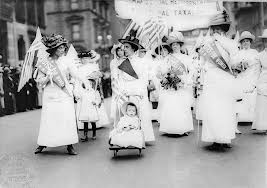
Sufferage – Women and the GOP

Women and the GOP
Suffrage

The Republican Party pioneered the right of women to vote and was consistent in its support throughout the long campaign for acceptance. It was the first major party to advocate equal rights for women and the principle of equal pay for equal work.  The Women’s Rights Convention held in Seneca Falls, N.Y., in 1848 marked the beginning of the women’s suffrage movement in the United States. Two years later there was a nationwide meeting in Worcester, Mass.  By 1870, the Massachusetts Republican State Convention had already seated two suffragettes, Lucy Stone and Mary A. Livermore, as delegates. In addition, the National Republican Convention of 1872 approved a resolution favoring the admission of women to “wider fields of usefulness” and added that “the honest demand of this class of citizens for additional rights … should be treated with respectful consideration.” 

Wyoming, the state that pioneered women’s suffrage, sent two women, Therese A. Jenkins and Cora G. Carleton, to the 1892 Republican Convention in Minneapolis as alternate delegates. This was the first time women were seated at a Republican National Convention.

This convention was also the first to be addressed by a woman, J. Ellen Foster, chairman of the Women’s Republican Association of the United States. A strong believer in organization, Foster said her association had prepared work plans for women’s involvement in national politics. Copies were given to each delegate and alternate. “We are here to help you,” she declared, “and we are here to stay.” 

At the request of Susan B. Anthony, Sen. A.A. Sargent, a Republican from California, introduced the 19th Amendment in 1878. Sargent’s amendment (also known as the Susan B. Anthony Amendment) was defeated four times by a Democrat-controlled Senate. When the Republican Party regained control of Congress in 1919, the Equal Suffrage Amendment finally passed the House in May of that year and in the Senate in June. 

When the Amendment was submitted to the states, 26 of the 36 states that ratified it had Republican legislatures. Of the nine states that voted against ratification, eight were Democratic. Twelve states, all Republican, had given women full suffrage before the federal amendment was ratified. 

On August 18, 1920, Tennessee became the 36th and final state needed to ratify the amendment. The U.S. Secretary of State certified the amendment on Aug. 26, 1920.

Source: Office of the Co-Chairman, The Republican National Committee

sufferage

Why does it seems after we elect a judge he’s always there? What does it mean when the judge appears on the ballot for “retention?”

How Pennsylvania Judicial Elections Work

Currently in Pennsylvania, elections to fill vacancies on the courts are held in odd-numbered years. Appellate court and common pleas court candidates run in partisan elections (i.e., under a party label) for terms of ten years; minor court candidates also run in partisan elections, but for six year terms. Typically, the major political parties endorse candidates to run. For trial judges only, a candidate may receive the endorsement of both parties. Following completion of a term, a judge can stand for successive ten-year terms in retention elections (non-partisan, uncontested yes/no votes) up until mandatory retirement at the age of seventy.

Like other candidates who run for office in contested elections, judicial candidates must raise money to finance their campaigns. Typically, contributors to such campaigns are the very parties, litigants and lawyers who ultimately appear before the courts on which the candidates are seeking to serve.  Additionally, third party special interest groups have become increasingly active in judicial elections, funding advertising campaigns and making contributions to candidates. Rules of conduct do not require judges to recuse themselves in cases involving campaign contributors.

Historically, judicial elections in Pennsylvania have not generated nearly as much media coverage, citizen interest or participation as elections for representative office, such as governor, senator, or representative. Voters, in fact, have complained that they have not had much information available to them in making decisions between candidates. This perceived lack of information in large part resulted from codes of conduct prohibiting judicial candidates from announcing their views on disputed issues likely to come before them on the courts.

Who may run for judicial office in Pennsylvania?

Under the current system, the only requirements for an individual to run for judicial office are:

  • United States citizenship;
  • Residency of at least one year in Pennsylvania (or, for local elections, in the county);
  • Membership in the bar of the Supreme Court; and
  • At least 21 years old.

Judicial candidates are not required to have tried any cases or even actually practiced law at all, let alone for any minimum number of years.

How long are judges elected for?

Most judges are elected for ten year terms. This is true for elections to fill judicial vacancies, as well as for subsequent retention elections.  However, municipal court and traffic judges in Philadelphia serve six year terms.

What is a retention election?

Retention elections are non-partisan, uncontested yes-no votes. This differs from an election to fill a judicial vacancy where candidates run in partisan elections (i.e. under a party label.) Following completion of an initial term, a judge can stand for successive ten-year terms in retention elections until he or she reaches age 70, the mandatory retirement age.

What happens if there is a vacancy created mid-term?

In the event a vacancy is created by the retirement, resignation, death or election of a judge to a higher court, an interim vacancy is created. The vacancy is filled by nomination by the Governor and confirmation by a two-thirds vote of the state Senate. Typically, for appellate court interim vacancies, the nominee’s confirmation is conditioned on a promise that he or she will not run in the succeeding election to fill the vacancy.

Who are current judges and justices on the Pennsylvania courts?

To view PMC’s charts on the current composition of the Supreme Court, click here, and on the Superior and Commenwealth Courts, click here.

http://www.pmconline.org/node/31

Conestoga Woood Specialities, Pa. family business, asks full Third Circuit to protect religious freedom

Pa. family business asks full Third Circuit to protect religious freedom
Court of Appeals declined to halt enforcement of abortion pill mandate

LANCASTER COUNTY, Pa. — The Independence Law Center representing the Mennonite-owned company, Conestoga Wood Specialties, Inc. has asked the full U.S. Court of Appeals for the Third Circuit to rehear its case after a three judge panel of that court declined to halt enforcement of the Obama administration’s abortion pill mandate.

The case, Conestoga Wood Specialties Corp. v. Sebelius, involves a mandate by the federal government that all employee health insurance plans include coverage for FDA approved contraception. Consistent with the FDA labeling, however, many of these forms of contraception work to change the lining of the uterus so that an embryo could be destroyed after conception. For the Hahn family, Mennonites from Lancaster County, Pennsylvania, the government mandate confronts a matter of religious faith since it would be contrary to their faith to in any way facilitate the taking of human life.

Charles W. Proctor, III is lead counsel in the case, together with Randall Wenger, chief counsel of the Independence Law Center, and attorney Matt Bowman of Alliance Defending Freedom.

“Americans should be free to live out their faith in all areas of life—including the way they run their business,” said Wenger. “We are hopeful that the Court of Appeals or eventually the Supreme Court will understand the critical importance of our right to live out our religious faith—and the heart-wrenching violation of conscience that it would be to the Hahns to deny them that right.”

“The religious liberty of Americans is not something that should be withheld or dispensed by the government as it arbitrarily sees fit,” added Proctor. “Instead, our Declaration of Independence makes it clear that the Hahn family and all Americans are ‘endowed by their Creator with certain unalienable Rights’ and the free exercise of religion is the very first right enumerated in our Bill of Rights.”

This has been a hard fought journey for Conestoga Wood and the Hahns. They filed suit in the U.S. District Court for the Eastern District of Pennsylvania on Dec. 4 of last year asserting that being forced to provide and pay for insurance that covers drugs and devices that could result in the death of an embryo is contrary to their religious convictions. The District Court denied a request for a Preliminary Injunction on January 11, so Conestoga Wood and the Hahns appealed on January 14 and moved for an injunction pending appeal on January 22, which was denied on February 7. A three judge panel of the Court Appeals ruled against them on July 26, and they filed a petition this week seeking reargument before the full Court.

Conestoga Wood and the Hahns join many other family run businesses around the country seeking injunctions to protect them from the abortion pill mandate.

The Independence Law Center is a pro-bono, non-profit law center in Pennsylvania focused on protecting religious liberty.

http://www.pafamily.org/

PA HB 1154 Hearing on 8/22/2013 – Make PA Right to Work State!

A hearing on HB 1154 to close the loophole allowing union bosses to harass, stalk and threaten the use of weapons of mass destruction without fear of criminal prosecution will be held on Thursday, August 22, 2013 at 10:30 am at the State Capitol Building, Harrisburg Pa Ryan Bldg Rm 205

PA Right to work logo