SUN Area Council of Republican Women Formally Opposes Common Core Standards

Resolution on Common Core State Standards and Assessments

WHEREAS, The Common Core State Standards Initiative (“Common Core”), and its Pennsylvania implementation now known as Pennsylvania Academic Standards, are a set of academic standards, promoted and supported by two private organizations, the National Governor’s Association (NGA) and the Council of Chief State School Officers (CCSSO) as a method for conforming American students to uniform (“one size fits all”) achievement goals to make them more competitive in a global marketplace; and,

read the entire resolution

Congressman Marino hold press conference to discuss the Rape Survivor Child Custody Act

Congressman Tom Marino will be holding a press conference on Tuesday, August 27, 2013 at 2:30 pm at the Selinsgrove Borough Council Chambers/Selinsgrove Library.  During this time he will discuss a bill he is sponsoring regarding the Rape Survivor Child Custody Act.  This bill encourages states to adopt a judicial mechanism to terminate specific parental rights based on clear and convincing evidence that a child was conceived through rape.  It offers increased protection to the victim and to the child who would otherwise be subjected to an upbringing in a traumatic and unhealthy environment and supports the premise that “rapists should not have custody rights.”  The public is invited to attend and show their support.

Sufferage – Women and the GOP

Women and the GOP
Suffrage

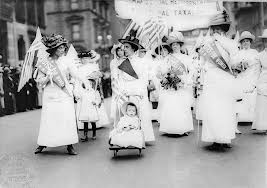
The Republican Party pioneered the right of women to vote and was consistent in its support throughout the long campaign for acceptance. It was the first major party to advocate equal rights for women and the principle of equal pay for equal work.  The Women’s Rights Convention held in Seneca Falls, N.Y., in 1848 marked the beginning of the women’s suffrage movement in the United States. Two years later there was a nationwide meeting in Worcester, Mass.  By 1870, the Massachusetts Republican State Convention had already seated two suffragettes, Lucy Stone and Mary A. Livermore, as delegates. In addition, the National Republican Convention of 1872 approved a resolution favoring the admission of women to “wider fields of usefulness” and added that “the honest demand of this class of citizens for additional rights … should be treated with respectful consideration.” 

Wyoming, the state that pioneered women’s suffrage, sent two women, Therese A. Jenkins and Cora G. Carleton, to the 1892 Republican Convention in Minneapolis as alternate delegates. This was the first time women were seated at a Republican National Convention.

This convention was also the first to be addressed by a woman, J. Ellen Foster, chairman of the Women’s Republican Association of the United States. A strong believer in organization, Foster said her association had prepared work plans for women’s involvement in national politics. Copies were given to each delegate and alternate. “We are here to help you,” she declared, “and we are here to stay.” 

At the request of Susan B. Anthony, Sen. A.A. Sargent, a Republican from California, introduced the 19th Amendment in 1878. Sargent’s amendment (also known as the Susan B. Anthony Amendment) was defeated four times by a Democrat-controlled Senate. When the Republican Party regained control of Congress in 1919, the Equal Suffrage Amendment finally passed the House in May of that year and in the Senate in June. 

When the Amendment was submitted to the states, 26 of the 36 states that ratified it had Republican legislatures. Of the nine states that voted against ratification, eight were Democratic. Twelve states, all Republican, had given women full suffrage before the federal amendment was ratified. 

On August 18, 1920, Tennessee became the 36th and final state needed to ratify the amendment. The U.S. Secretary of State certified the amendment on Aug. 26, 1920.

Source: Office of the Co-Chairman, The Republican National Committee

sufferage

Origin of the Republican Elephant

The Republican Party
Origin of the Republican Elephant

 
This symbol of the party was born in the imagination of cartoonist Thomas Nast and first appeared in Harper’s Weekly on Nov. 7, 1874. An 1860 issue of Railsplitter and an 1872 cartoon in Harper’s Weekly connected elephants with Republicans, but it was Nast who provided the party with its symbol.

Oddly, two unconnected events led to the birth of the Republican Elephant. James Gordon Bennett’s New York Herald raised the cry of “Caesarism” in connection with the possibility of a third term try for President Ulysses S. Grant. The issue was taken up by the Democratic politicians in 1874, halfway through Grant’s second term and just before the midterm elections, and helped disaffect Republican voters.

While the illustrated journals were depicting Grant wearing a crown, the Herald involved itself in another circulation-builder in an entirely different, nonpolitical area. This was the Central Park Menagerie Scare of 1874, a delightful hoax perpetrated by the Herald. They ran a story, totally untrue, that the animals in the zoo had broken loose and were roaming the wilds of New York’s Central Park in search of prey.

Cartoonist Thomas Nast took the two examples of the Herald enterprise and put them together in a cartoon for Harper’s Weekly. He showed an ass (symbolizing the Herald) wearing a lion’s skin (the scary prospect of Caesarism) frightening away the animals in the forest (Central Park). The caption quoted a familiar fable: “An ass having put on a lion’s skin roamed about in the forest and amused himself by frightening all the foolish animals he met within his wanderings.”

One of the foolish animals in the cartoon was an elephant, representing the Republican vote – not the party, the Republican vote – which was being frightened away from its normal ties by the phony scare of Caesarism. In a subsequent cartoon on Nov. 21, 1874, after the election in which the Republicans did badly, Nast followed up the idea by showing the elephant in a trap, illustrating the way the Republican vote had been decoyed from its normal allegiance.

Other cartoonists picked up the symbol, and the elephant soon ceased to be the vote and became the party itself: the jackass, now referred to as the donkey, made a natural transition from representing the Herald to representing the Democratic party that had frightened the elephant.


From William Safire’s “New Language of Politics,” Revised edition, Collier Books, New York, 1972

I am a Republican because. . . (Republican Principles)

The Republican Party
Republican Principles

I am a Republican because:

I believe the strength of our nation lies with the individual and that each person’s dignity, freedom, ability and responsibility must be honored.

I believe in equal rights, equal justice and equal opportunity for all, regardless of race, creed, sex, age or disability.

I believe that free enterprise and the encouragement of individual initiative have brought this nation opportunity, economic growth and prosperity.

I believe government must practice fiscal responsibility and allow individuals to keep more of the money they earn.

I believe the proper role of government is to provide for the people only those critical functions that cannot be performed by individuals or private organizations and that the best government is that which governs least.

I believe the most effective, responsible and responsive government is government closest to the people.

I believe Americans must retain the principles that have made us strong while developing new and innovative ideas to meet the challenges of changing times.

I believe Americans value and should preserve our national strength and pride while working to extend peace, freedom and human rights throughout the world.

Finally, I believe the Republican Party is the best vehicle for translating these ideals into positive and successful principles of government. 

Source: The Republican National Committee

The Republican Oath

The Republican Party
Republican Oath

I believe that the proper function of government is to do for the people those things that have to be done but cannot be done, or cannot be done as well by individuals, and that the most effective government is government closest to the people.

I believe that good government is based on the individual and that each person’s ability, dignity, freedom and responsibility must be honored and recognized.

I believe that free enterprise and the encouragement of individual initiative and incentive have given this nation an economic system second to none.

I believe that sound money policy should be our goal.

I believe in equal rights, equal justice and equal opportunity for all, regardless of race, creed, age, sex or national origin. I believe that persons with disabilities should be afforded equal rights, equal justice and equal opportunity as well.

I believe we must retain those principles worth retaining, yet always be receptive to new ideas with an outlook broad enough to accommodate thoughtful change and varying points of view.

I believe that Americans value and should preserve their feeling of national strength and pride, and at the same time share with people everywhere a desire for peace and freedom and the extension of human rights throughout the world.

Finally, I believe that the Republican Party is the best vehicle for translating these ideals into positive and successful principles of government.

Source: The Republican National Committee